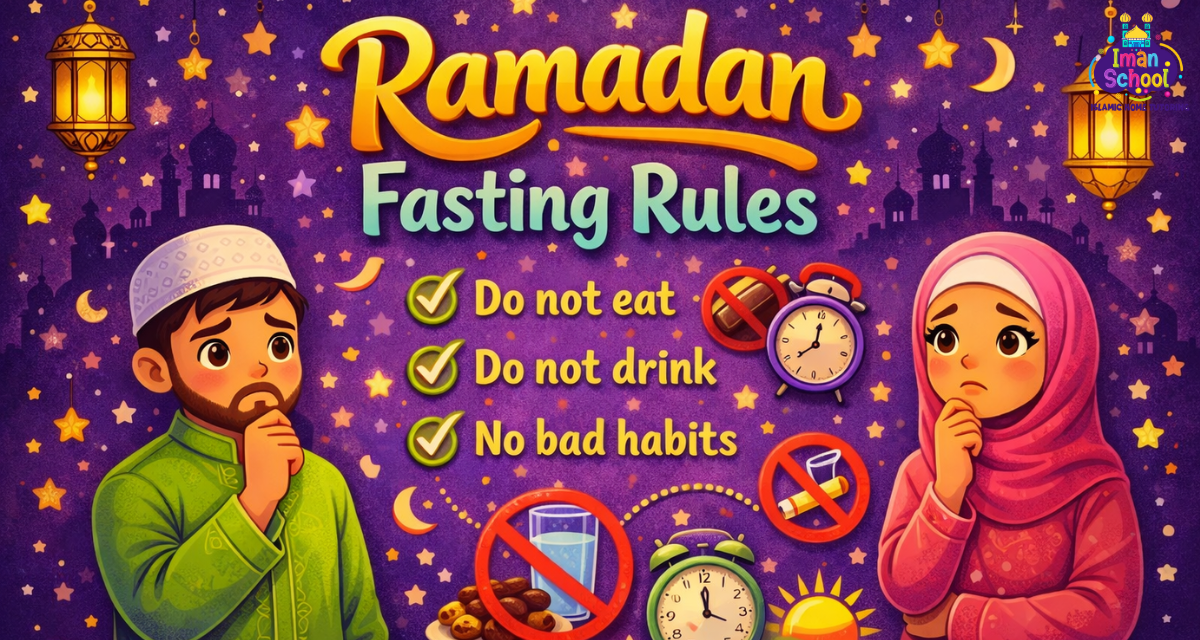
As the holiest month of the year approaches, every Muslim seeks to ensure their worship is correct and accepted. Understanding the Ramadan fasting rules is not just about knowing when to eat and drink; it is about grasping the spiritual and legal framework that governs this pillar of Islam. Whether you are a new Muslim or looking to refresh your knowledge, mastering the Ramadan fasting rules ensures that your devotion aligns with the Quran and the Sunnah of the Prophet (PBUH).
The Essential Pillars of a Valid Fast
For a fast to be legally valid under Ramadan fasting rules, two essential pillars must be met:
-
Intention for fasting (Niyyah): One must make the intention in the heart before the time of Fajr. The Prophet (PBUH) said: "Whoever does not fast before Fajr, there is no fast for him" (Sunan an-Nasa'i).
-
Abstinence (Imsak): Refraining from food, drink, and marital relations from the Time of Imsak and Fajr until sunset (Maghrib).

Learn: What is the Ramadan Kareem Meaning
Valid Exemptions: Who is Not Required to Fast?
The Ramadan fasting rules are designed with mercy. Allah says in the Quran: "Allah intends for you ease and does not intend for you hardship" (Surah Al-Baqarah 2:185). The Exemptions from fasting include:
-
Fasting rules for sick people: If fasting worsens an illness, they may break it.
-
Fasting rules for travelers: Those on a journey have the option to break their fast.
-
Ramadan fasting rules for elderly: Those too frail to fast are exempt.
-
Fasting rules for pregnant and nursing women: If they fear for their health or the baby's health, they are exempt.
Major Nullifiers: What Breaks the Fast?
Understanding the Nullifiers of fasting in Ramadan is crucial. According to the Fiqh of fasting for beginners, the following things that break the fast require the day to be made up:
-
Intentional Eating or Drinking: Even a small morsel.
-
Deliberate Vomiting: The Prophet (PBUH) said: "Whoever is overcome by vomiting does not have to make it up, but whoever vomits intentionally must make it up" (Abu Dawood).
-
Marital Relations: This is a major violation of Ramadan fasting rules during daylight hours.
-
Menstruation or Postpartum Bleeding: The fast becomes invalid the moment bleeding begins.
The Reason: Why is fasting in Ramadan obligatory
Common Misconceptions: What Does NOT Break the Fast?
Many people get confused about Permissible acts while fasting. According to the Ramadan fasting rules found in classical texts like Al-Mughni by Ibn Qudamah:
-
Involuntary acts while fasting: If you eat or drink by mistake out of forgetfulness, your fast is still valid.
-
Fasting and medication rules: Eye drops, ear drops (unless they reach the throat), and non-nutritional injections (like insulin) do not break the fast.
-
Hygiene: Brushing teeth (with care), showering, and using Siwak are all permissible.
Sunnah and Recommended Manners of Fasting
To gain the full reward, one should follow the Sunnah of fasting in Ramadan. This includes the Rules for Suhoor and Iftar:
-
Delaying Suhoor: Eating close to the time of Fajr.
-
Hastening Iftar: Breaking the fast immediately at sunset with dates or water.
-
Ramadan etiquette and behavior: Avoiding sins while fasting like lying, backbiting, or arguing. The Prophet (PBUH) said: "If one of you is fasting, he should avoid obscenity and shouting" (Sahih Bukhari).
-
Avoiding Makruh acts during fasting: Such as excessive tasting of food (without swallowing) or unnecessary complaining about hunger.

Best Ways for: Preparing for Ramadan in Shaban
Understanding Qada, Fidyah, and Kaffarah
If a fast is missed or broken, the Ramadan fasting rules provide a path for rectification:
-
Rules for making up missed fasts (Qada): Simply fasting one day for every day missed.
-
Rules for Kaffarah and Fidyah: Kaffarah is a heavy penalty (like fasting 60 consecutive days) for intentionally breaking the fast with marital relations. Fidyah is a small payment (feeding a poor person) for those who cannot fast due to permanent reasons, like the Ramadan fasting rules for elderly.
Enroll your child in Iman School today
FAQ about Ramadan fasting rules
Does using an inhaler break the fast?
Most modern scholars, following the Fasting and medication rules, state that asthma inhalers do not break the fast as they are gases directed to the lungs, not the stomach.
What happens if I eat by mistake?
Under Ramadan fasting rules, Involuntary acts while fasting are forgiven. The Prophet (PBUH) said: "Allah has fed him and given him drink" (Sahih Muslim).
For Kids: How to Make Ramadan Fun 2026
Is it okay to use toothpaste?
Yes, but it is Makruh if you fear swallowing it. It is better to use a Siwak during the day.
Can I travel just to avoid fasting?
No. While Fasting rules for travelers allow exemptions, scholars like Imam Malik noted that traveling solely to escape the fast is sinful.
What is the rule for a nursing mother?
She follows the Fasting rules for pregnant and nursing women; she can break the fast if needed and make it up later.
5 Recommended Deeds: Virtues of the month of Shaban
Master the Fiqh of Ramadan with Iman School
Navigating the Ramadan fasting rules can be complex, but you don't have to do it alone. At Iman School, we offer the best online Islamic classes to help you prepare for the holy month.
Our expert tutors provide a deep dive into the Fiqh of fasting for beginners, ensuring you understand the Sunnah of fasting in Ramadan and avoid the Nullifiers of fasting in Ramadan.