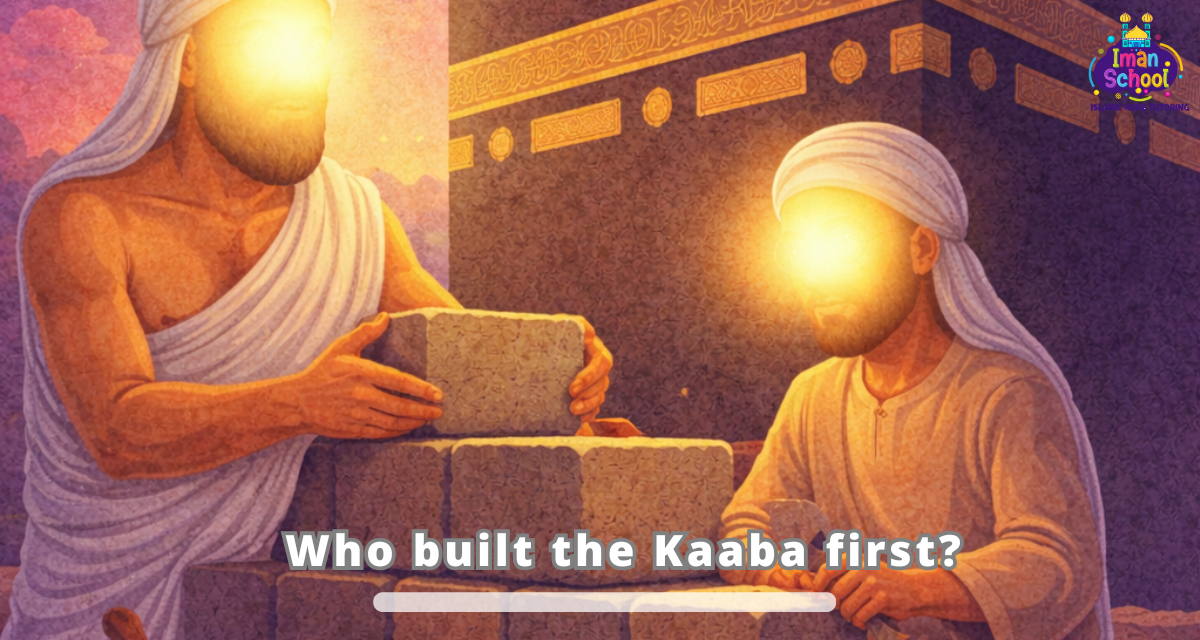
The Kaaba is the focal point of every Muslim's prayer and the heart of the Islamic world. But as we stand in its presence or face its direction, many wonder: Who built the Kaaba first? Understanding Who built the Kaaba is not just a matter of architecture; it is a journey through the History of the Kaaba in Islam that connects the first human to the final Messenger.
The First House of Worship on Earth
According to the Quran, the Kaaba is the First House of Worship on Earth. Allah (SWT) says:
"Indeed, the first House [of worship] established for mankind was that at Becca [Makkah] - blessed and a guidance for the worlds." (Surah Ali 'Imran, 3:96).
Regarding the question of Who built the Kaaba for the very first time, there are three primary scholarly views based on Islamic tradition on the origins of Makkah:
1- The Role of Angels in Building the Kaaba
Some scholars, including some of the Sahaba and Tabi'un, suggested that the Role of Angels in building the Kaaba preceded humanity. In this view, the First foundation of the Baitullah was laid by angels directly under the Bayt al-Ma'mur (the heavenly house) even before Adam (AS) descended to Earth.
2- Did Adam Build the Kaaba?
A widely held opinion among historians like Ibn Kathir is the answer to: Did Adam build the Kaaba? It is narrated that after Adam (AS) was sent to Earth, he was commanded to build the sanctuary. In this narration, Adam (AS) established the Kaaba's original structure and shape, which served as a place for his repentance and worship.
3- Ibrahim and Ismail Building the Kaaba
While earlier structures may have existed, the most definitive and Quranically detailed answer to Who built the Kaaba refers to the Prophet Ibrahim (AS) and his son. Ibrahim and Ismail building the Kaaba is a fact mentioned explicitly in the Building the Kaaba in Quranic verses:
"And [mention] when Abraham was raising the Foundations of the Kaaba (Qawa'id) and [with him] Ishmael, [saying], 'Our Lord, accept [this] from us...'" (Surah Al-Baqarah, 2:127).
Read about: Difference between a Prophet and a Messenger
Key Elements in the Construction of the Kaaba
When researching Who built the Kaaba, we must look at the miraculous elements that accompanied its construction:
-
Maqam Ibrahim (Station of Abraham): This is the stone upon which Ibrahim (AS) stood while Who built the Kaaba walls higher. It miraculously softened under his feet, leaving his footprints preserved to this day.
-
Black Stone (Hajar al-Aswad) History: During the construction, the Angel Jibril brought a stone from Jannah. This stone was placed in the corner as a starting point for the Hajj and the history of Tawaf.
-
Zamzam Water and the Kaaba History: The existence of the Kaaba is inseparable from the miracle of Zamzam, which allowed Ismail (AS) and his mother Hajar to settle in the barren valley of Makkah.
Learn more about: Khadija bint Khuwaylid: Mother of the Believers
Rebuilding the Kaaba Through History
The question of Who built the Kaaba doesn't end with the Prophets. Due to floods and natural wear, there have been several Renovations of the Kaaba over time:
-
Rebuilding of the Kaaba by Quraysh: When the Prophet Muhammad (PBUH) was 35 years old, the Quraysh rebuilt it. It was during this time that the Prophet (PBUH) personally placed the Black Stone (Hajar al-Aswad) to settle a tribal dispute.
-
Abdullah ibn al-Zubayr and Al-Hajjaj: Later, significant Renovations of the Kaaba over time were carried out to return the structure to the original dimensions Ibrahim (AS) had intended, including the Hatīm (the semi-circular wall).
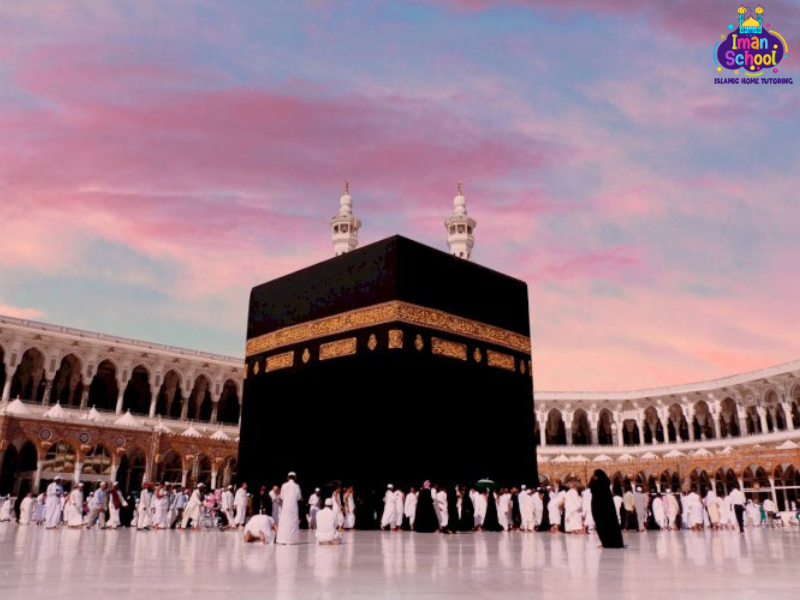
Today, the Preservation of the Kaaba through history is managed by the Saudi government, ensuring the Holy Sanctuary in Makkah (Masjid al-Haram) remains a safe haven for millions.
Discover: Who was the first Muadhin in Islam
10 Key Facts About the Construction of the Kaaba
- The Kaaba was first built by Prophet Ibrahim (Abraham) and his son Ismail (Ishmael), peace be upon them.
- It was constructed in obedience to a direct command from Allah.
- The Kaaba is located in the center of Masjid al-Haram in Makkah.
- Its original structure was simple and made from local stones.
- The Black Stone (Al-Hajar Al-Aswad) was placed in one of its corners by Prophet Ibrahim.
- The Kaaba has been rebuilt and renovated several times throughout history.
- During the rebuilding by the Quraysh tribe, Prophet Muhammad, peace be upon him, helped place the Black Stone.
- The Kaaba is cuboid in shape, which is why it is called “Kaaba” meaning “cube.”
- Muslims around the world face the Kaaba during their daily prayers.
- The Kaaba represents unity, monotheism, and devotion to Allah.
Explore: Meaning of La Ilaha Illallah
What Is Agreed Upon and What Is Disputed Regarding the Origins of the Ka'bah
Agreed Upon Accounts
The Ka'bah has been rebuilt several times throughout history. Scholars unanimously agree on its reconstruction by Prophet Ibraaheem, peace be upon him, followed by the Quraysh tribe, then by Ibn Az-Zubayr, and later by Al-Hajjaaj ibn Yoosuf under the order of Abdul-Malik ibn Marwaan.
Accounts Without Scholarly Consensus
Other narrations attribute the construction of the Ka'bah to the angels, Prophet Aadam or his son Sheeth, as well as to later groups such as the Jurhum tribe, Qusayy ibn Kilaab, Abdul-Muttalib, and a people described as giants. However, these accounts remain debated and are not unanimously accepted by scholars.
FAQ about Who built the Kaaba first
Who built the Kaaba according to the most authentic sources?
The most explicit mention in the Quran is Ibrahim and Ismail building the Kaaba. While earlier foundations may have been laid by Adam (AS), Ibrahim (AS) raised the walls that we recognize today.
Find out more about: How long did it take Noah to build the ark
Which Prophets who visited the Kaaba are mentioned in tradition?
It is said that almost every Prophet performed Hajj. The History of the Kaaba in Islam notes that Nuh (AS), Hud (AS), and many others honored this First House of Worship on Earth.
What is the religious significance of the Kaaba for new Muslims?
For reverts, understanding Who built the Kaaba helps them realize that Islam is not a new religion, but a return to the original monotheism of Ibrahim (AS).
Learn the Stories of the Prophets with Iman School
The history of Who built the Kaaba is a central pillar of the Islamic studies online courses offered at Iman School. If you want to dive deeper into the History of the Kaaba in Islam and the lives of the Prophets with evidence from the Quran and Sunnah, you need a structured environment.
Iman School is the best online Islamic school, offering expert-led courses on the Seerah, Aqidah, and Fiqh. We help you understand the Religious significance of the Kaaba and the legacy of Ibrahim (AS) through authentic, easy-to-follow lessons.