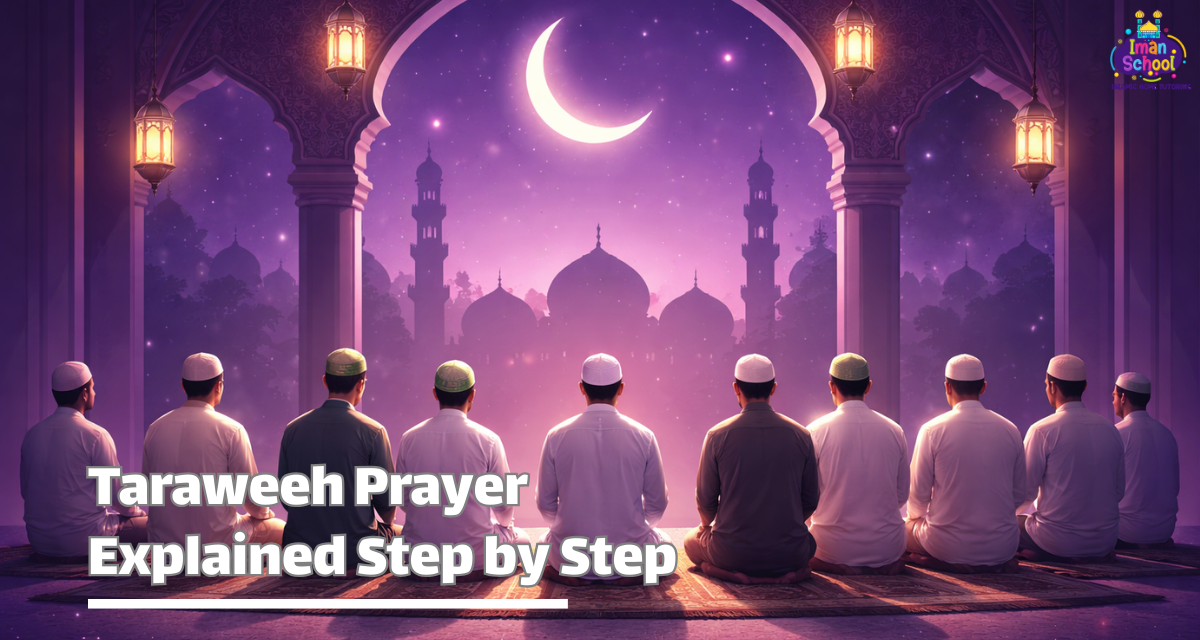
The holy month of Ramadan is not only about fasting from dawn to sunset; it is about reviving our hearts during the night. Central to this spiritual revival is the Taraweeh Prayer. For Muslims living in the West, finding the time and energy to attend the mosque can be challenging, but understanding the beauty of the Taraweeh Prayer makes every effort worthwhile. Whether you are a new revert or looking to improve your practice, this guide will explain the Taraweeh Prayer in detail, helping you connect with this beautiful Sunnah.
What is the Taraweeh Prayer?
The Taraweeh Prayer is a special congregational prayer performed exclusively during the nights of Ramadan. But is Taraweeh prayer Sunnah or Fard? Scholars classify it as Sunnah Muakkadah (an emphasized Sunnah) for both men and women. The word "Taraweeh" itself comes from the Arabic word meaning "to rest," because the companions of the Prophet (PBUH) used to take a brief rest after every four Rakats.
Evidence from the Sunnah and History
The Prophet Muhammad (PBUH) laid the foundation for the Taraweeh Prayer. In a Sahih Hadith, he said:
"Whoever prays during the nights of Ramadan out of faith and seeking reward, his previous sins will be forgiven." (Sahih Bukhari)
While the Prophet (PBUH) prayed it in congregation for a few nights, he eventually prayed it at home to prevent it from becoming an obligation (Fard) on the Ummah. It was the second Caliph, Umar ibn al-Khattab (RA), who organized the believers behind one Imam in the Masjid, establishing the Taraweeh Prayer as we know it today.
The Ultimate Ramadan planner for Muslim women Guide 2026
Step by Step Taraweeh Prayer Guide
If you are looking for how to pray Taraweeh for beginners, the Taraweeh prayer procedure for women and men is quite straightforward.
-
Taraweeh prayer time after Isha: You must perform the Isha prayer and its Sunnah first. The order of prayers in Ramadan nights is: Isha -> Sunnah -> Taraweeh Prayer -> Witr.
-
Number of Rakats in Taraweeh prayer: Most Masjids perform 20 Rakats, while some perform 8. The minimum Rakats for Taraweeh prayer is 2, but the Sunnah is to aim for more.
-
The Pairs: You pray in sets of two. Perform the Taraweeh Prayer just like a regular 2-Rakat Sunnah prayer, ending with Tasleem (Salam) after every two.
-
Taraweeh prayer Dua and Tasbih: Between every four Rakats, it is common to recite the Taraweeh prayer Dua and Tasbih or engage in Dhikr while resting.
Guide 2026: Performing the Best deeds in Ramadan Every Day
Taraweeh Prayer at Home vs. Masjid
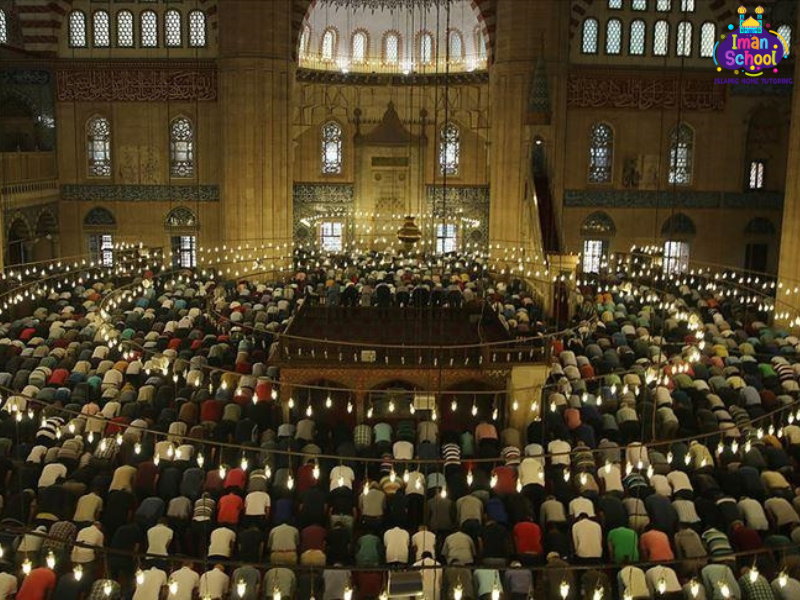
While many prefer the communal vibe of the mosque, Taraweeh prayer at home vs Masjid is a common debate. If you cannot reach a mosque, you can certainly perform the Taraweeh Prayer at home.
-
How to lead Taraweeh at home for family: The head of the house or the one with the most Quranic knowledge leads.
-
Reciting from Mushaf during Taraweeh: If you haven't memorized the whole Quran, many scholars (especially in the Shafi school) allow reciting from Mushaf during Taraweeh to complete a Khatam.
-
Repeating Surahs in Taraweeh prayer: If you only know a few Surahs, repeating Surahs in Taraweeh prayer is perfectly valid.
The Best Quran reading plan for Ramadan 2026
Common Fiqh Questions about Taraweeh
Difference between Taraweeh and Tahajjud
A frequent question is the difference between Taraweeh and Tahajjud. Technically, both are forms of Qiyam al-Layl (Night Prayer). However, the Taraweeh Prayer is specific to Ramadan nights and usually performed earlier, whereas Tahajjud is prayed throughout the year, typically in the last third of the night.
Can I pray Taraweeh sitting down?
If you have back pain or are elderly, you might ask, "Can I pray Taraweeh sitting down?" Yes, since it is a voluntary (Nafl) prayer, it is permissible to sit, though the reward is greater if you stand.
Shafi vs. Hanafi Taraweeh rules
The main Shafi vs Hanafi Taraweeh rules differ in the number of Rakats (both usually agree on 20) and the way Witr is performed. How to perform Witr after Taraweeh in the Hanafi school involves three Rakats with one Salam, whereas Shafis often pray two plus one.
Learn: What is the Ramadan Kareem Meaning
Benefits of Praying Taraweeh Every Night
The benefits of praying Taraweeh every night are immense. It is a time for:
-
Spiritual Cleansing: Wiping away sins.
-
Quranic Connection: Hearing the entire Quran recited over 30 days.
-
Community Bonds: Meeting fellow Muslims in the West.
-
Missing Taraweeh prayer compensation: While there is no formal "Make-up" for a missed Sunnah, you can pray extra Nafl or Tahajjud later that night if you missed the Taraweeh Prayer.
The Reason: Why is fasting in Ramadan obligatory
FAQ about Taraweeh Prayer
When is the best time for Taraweeh Prayer?
The Taraweeh prayer time after Isha starts immediately after the Sunnah of Isha and lasts until the break of dawn.
What is the minimum I should pray?
The minimum Rakats for Taraweeh prayer is 2, but following the Imam for 8 or 20 is the standard Sunnah.
Do women have to go to the mosque?
The Taraweeh prayer procedure for women is the same at home. While women are welcome in the Masjid, praying at home is equally rewarded.
Read about: Umrah in Ramadan
Perfect Your Prayer with Iman School
Mastering the Taraweeh Prayer requires a deep connection with the Quran. If you struggle with recitation or want to learn the Taraweeh prayer Dua and Tasbih with perfect Tajweed, Iman School is here to help.
Iman School offers the best online Islamic classes for Muslims in the West. Our Al-Azhar certified tutors can help you with:
-
Quranic Recitation: For those reciting from Mushaf during Taraweeh.
-
Fiqh of Prayer: Understanding the Shafi vs Hanafi Taraweeh rules.
-
Memorization: So you can lead the Taraweeh Prayer at home for your family.
Enroll in Iman School today and make this year's Taraweeh Prayer your most spiritual one yet.